Loading
Preparing your eco-travel experience…
Preparing your eco-travel experience…
IN THE FIELD
A closer look at the landscapes, wildlife, and heritage that shape this place.
Coming soon
Coming soon
AT A GLANCE
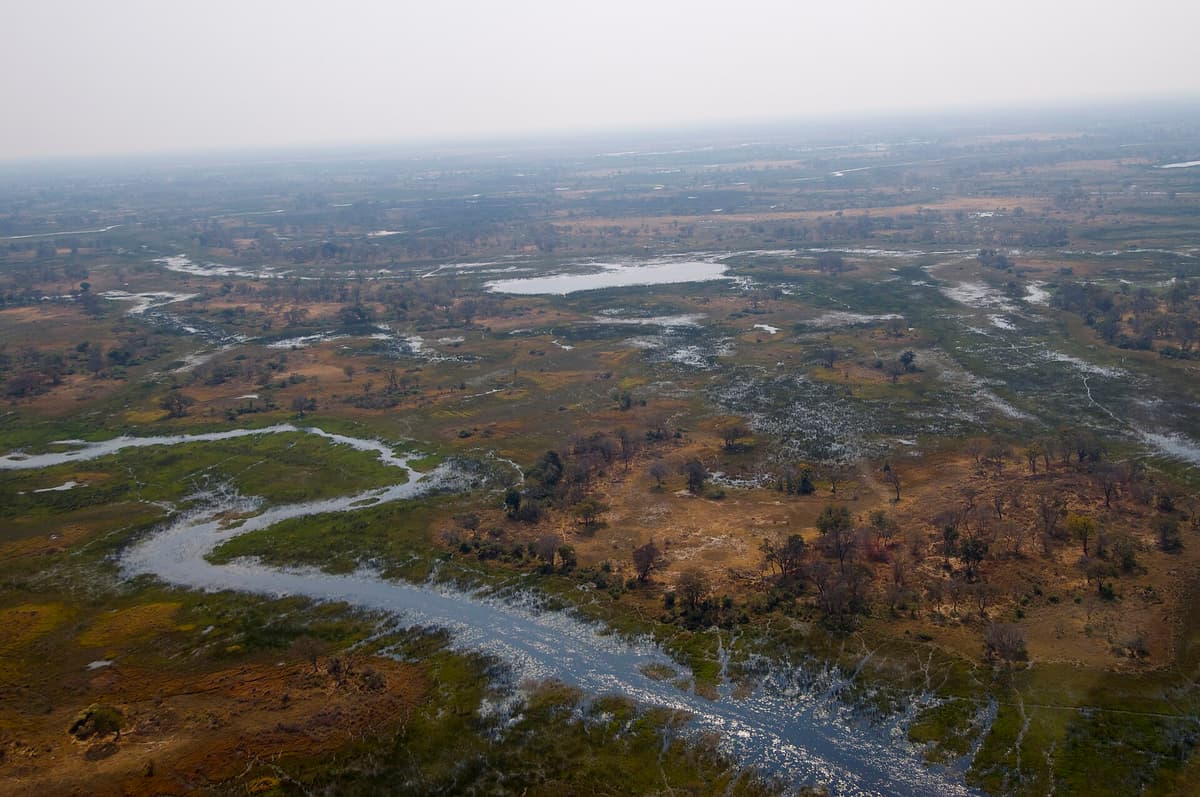
A UNESCO inland delta where the Okavango River dissipates into the Kalahari sands. Mokoro canoe safaris and low-density camps operate through community conservancy partnerships.
92
out of 100
Excellent (92 / 100)
LIVING SYSTEMS
Key species and ecological significance of this destination.
Wetland megafauna in an inland delta ecosystem
1,500+ documented speciesRegional climate patterns and seasonal conditions.
Hot dry winters; summer floods arrive May–August from Angolan highlands.
Current air quality conditions and health guidance.
AQI 38
Remote wetland with minimal anthropogenic pollution.
Air quality data is indicative. Check live readings before outdoor activities.
Optimal visiting periods based on climate and access.
May – October
Flood season fills channels; wildlife concentrates on shrinking dry land.
Practical advice for a safe and responsible visit.
Conservation practices and responsible tourism standards at this destination.
Community trust revenue from low-volume tourism
Motorboat-free zones in sensitive channels
Anti-poaching funded by concession fees
What makes this destination worth exploring.
A UNESCO inland delta where the Okavango River dissipates into the Kalahari sands. Mokoro canoe safaris and low-density camps operate through community conservancy partnerships.
Notable sights and natural features.
African elephant
African wild dog
Sitatunga
Pel's fishing owl
Experiences and activities available at this destination.
Practical information for planning your journey.
Costs vary by season, accommodation type, and travel style. Check official tourism boards and recent traveller reports for current estimates.
Options range from eco-lodges and park campsites to community-run guesthouses. Book through verified platforms when live providers are configured.
Getting to and around the destination.
Tours, activities, and local cuisine.
Regional cuisine reflects local ecosystems and cultural heritage. Support restaurants that source ingredients sustainably.
Environmental context for responsible travel.
Wetland megafauna in an inland delta ecosystem
Remote wetland with minimal anthropogenic pollution.
Hot dry winters; summer floods arrive May–August from Angolan highlands.
Responsible practices for protecting this destination.
Community trust revenue from low-volume tourism
Motorboat-free zones in sensitive channels
Anti-poaching funded by concession fees
Explore destinations, wildlife, and environmental context before you travel. EcoXplore provides informational guidance — not live bookings.
Follow connections from nature to destinations, travel guidance, and responsible exploration paths on EcoXplore.
Explore similar destinations in the same region or ecosystem type.
Mosi-oa-Tunya National Park protects one of the world's greatest waterfalls and Zambezi River gorge ecosystems. Low-impact viewing platforms and community tourism partnerships operate on both sides of the border.
UNESCO World Heritage Site protecting roughly half the world's mountain gorilla population. Permit-limited trekking funds anti-poaching patrols and community revenue-sharing.
The Serengeti hosts the world's largest terrestrial mammal migration and supports Africa's densest predator populations. Low-volume tourism zones protect the great wildebeest migration corridor.