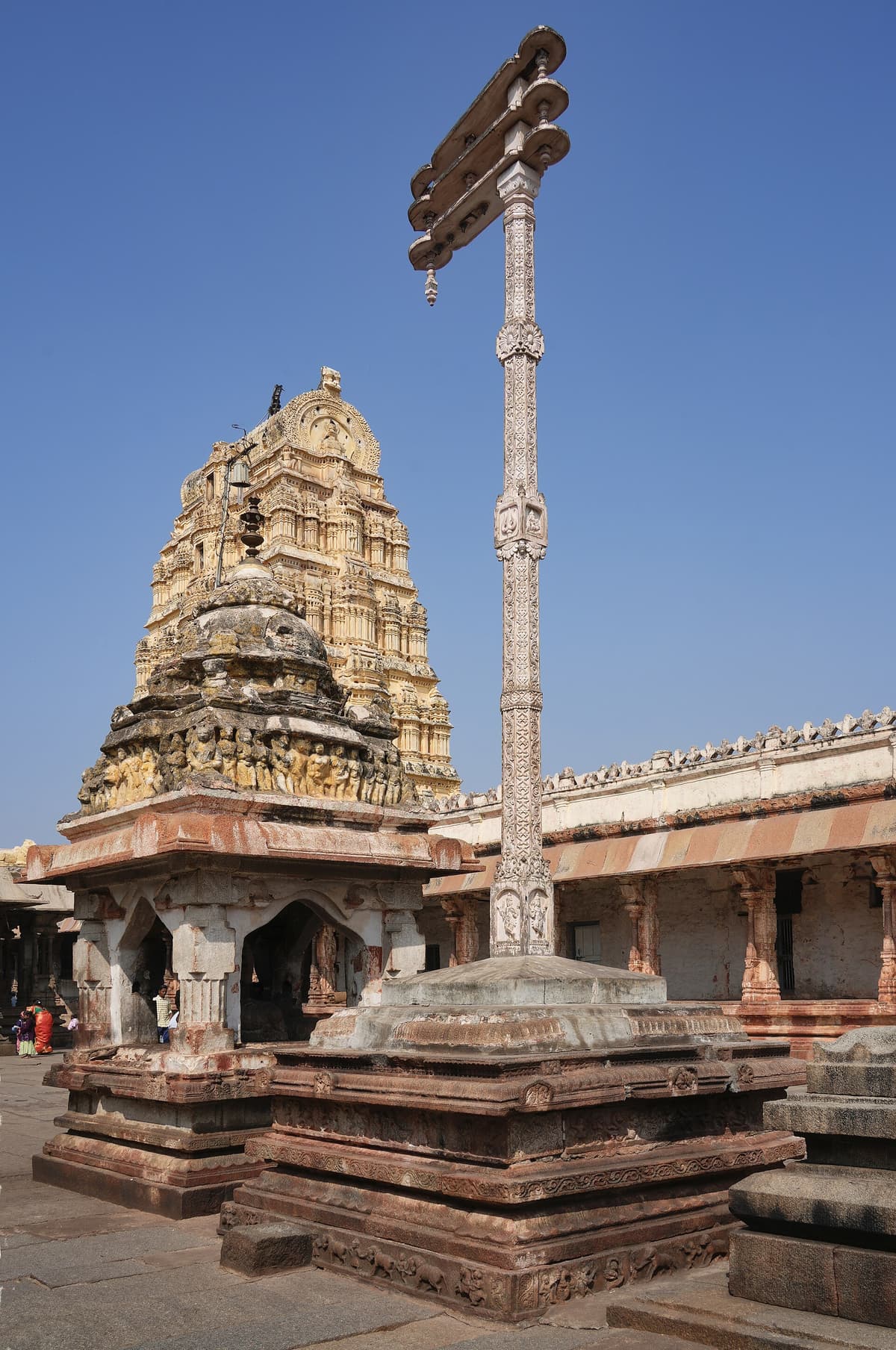
Virupaksha Temple
Active temple at the heart of the Hampi complex.
Preparing your eco-travel experience…
Karnataka, India
UNESCO Vijayanagara ruins amid boulder-strewn Deccan landscape.
Hampi preserves the ruins of Vijayanagara — a 14th–16th century capital scattered across granite boulders and banana plantations in Karnataka's Deccan scrubland.
Hampi is a UNESCO World Heritage Site where open-air temples, royal enclosures, and dramatic geology create a unique heritage landscape.
Active temple at the heart of the Hampi complex.
Famous stone chariot and musical pillars.
Granite hills framing open-air ruins.
The Group of Monuments at Hampi is UNESCO-listed — Virupaksha Temple, Vittala Temple (stone chariot), and royal enclosures span a vast archaeological zone.
Vijayanagara architecture combines Dravidian temple forms with imperial scale — ornate pillars, gopurams, and aqueduct systems across the site.
Vijayanagara was among the largest medieval cities in the world before its decline in 1565 — ruins spread across a fragile semi-arid ecosystem.
Boulder-strewn scrubland surrounds the ruins — habitat for dryland birds and reptiles; the Tungabhadra river borders the site.
Full eco-destination profiles with biodiversity, climate, and sustainability data.
UNESCO World Heritage Site — the boulder-strewn ruins of Vijayanagara capital amid Deccan scrubland. ASI-managed monuments sit within a fragile semi-arid landsc…
View destination profileOctober–February offers cooler mornings for walking among ruins.
Stay on marked paths, do not climb protected monuments, and respect active temple areas.
Support local guides and homestays; carry out all waste from the archaeological zone.
Discover India's documented temple cities and UNESCO heritage sites.
Start quest